


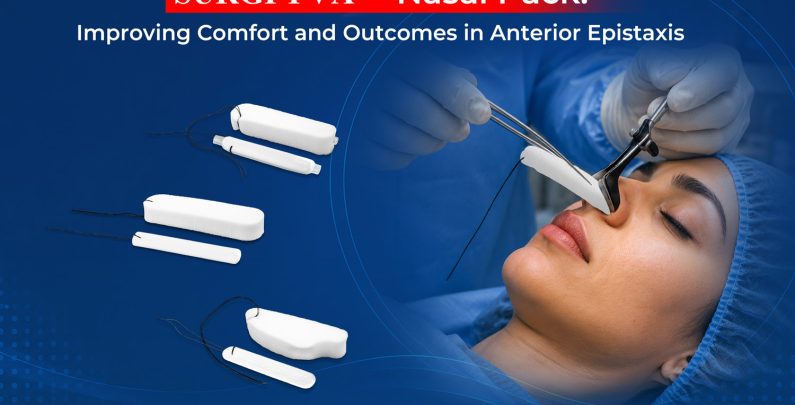
SURGI-PVA™ Nasal Pack: Improving Comfort and Outcomes in Anterior Epistaxis
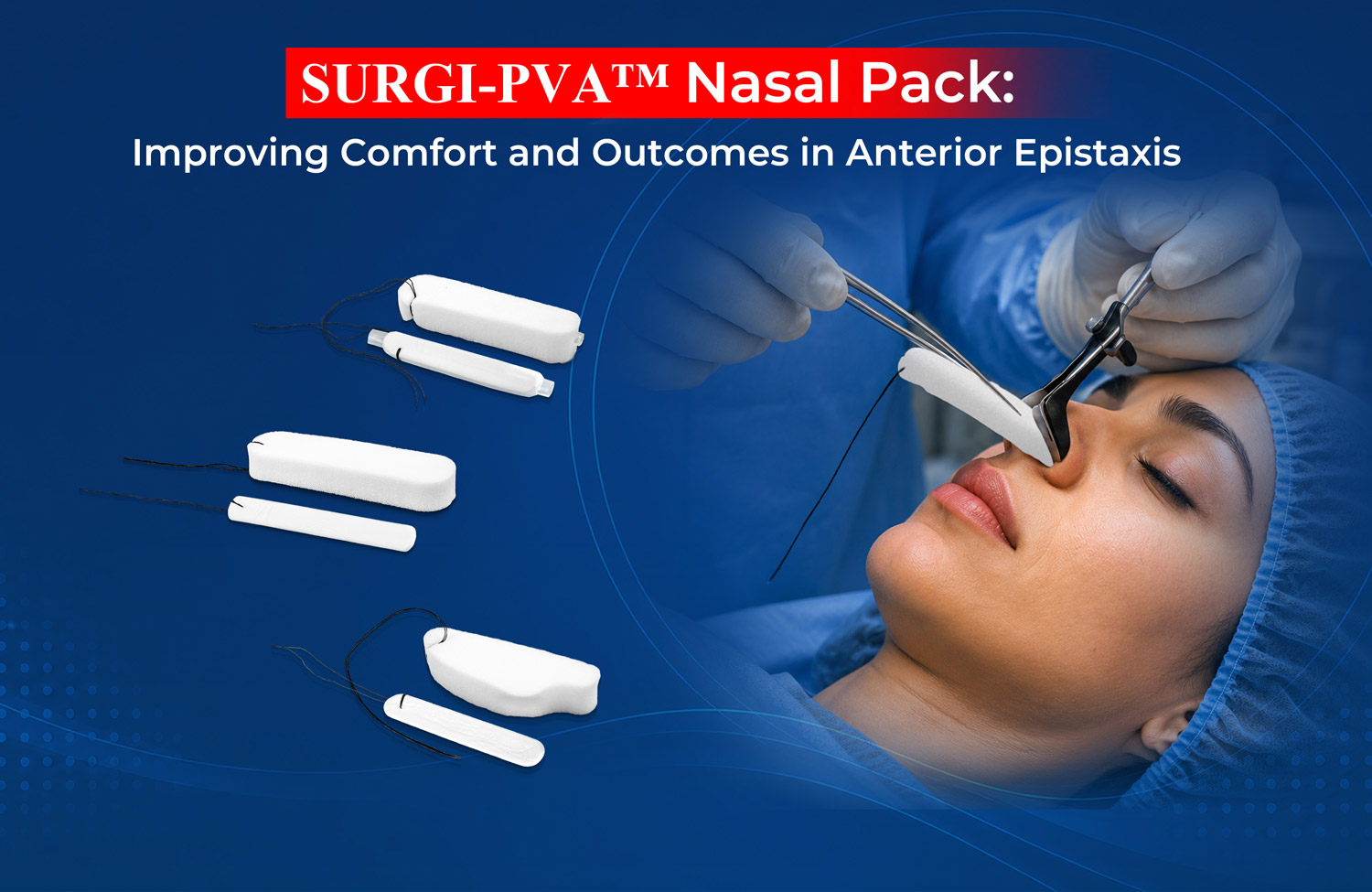
Epistaxis (nosebleed) is one of the most common ENT emergencies encountered in clinical practice.1 Although many episodes resolve on their own, persistent anterior epistaxis often requires nasal packing to achieve effective haemostasis and prevent recurrent bleeding. Approximately 80% of epistaxis cases originate from the anterior nasal cavity, most commonly from the Kiesselbach plexus,1,2 whereas posterior epistaxis is less common but is often associated with more severe bleeding requiring intensive management.1-3
For many years, traditional ribbon gauze has been widely used to manage anterior epistaxis because it is simple and effective at controlling bleeding. However, it can be difficult to place, uncomfortable for patients, and may be associated with complications such as mucosal damage, infection, and synechiae formation.2 These limitations have led to the development of advanced nasal packing materials that provide effective haemostasis while improving patient comfort.1
One such advancement is SURGI-PVA™, a polyvinyl alcohol (PVA) nasal pack designed to provide effective haemostasis while enhancing patient comfort. In this blog, we explore its key features, clinical benefits, and role in the management of anterior epistaxis.
What is SURGI-PVA™ Nasal Pack?
SURGI–PVA™ is a single-use PVA sponge designed for effective fluid management and haemostasis. It rapidly absorbs and retains blood and wound fluids, supporting haemostasis while providing gentle structural support within the nasal cavity. Its high-strength structure enables effective nasal cavity filling and allows easy trimming to accommodate different nasal anatomies.
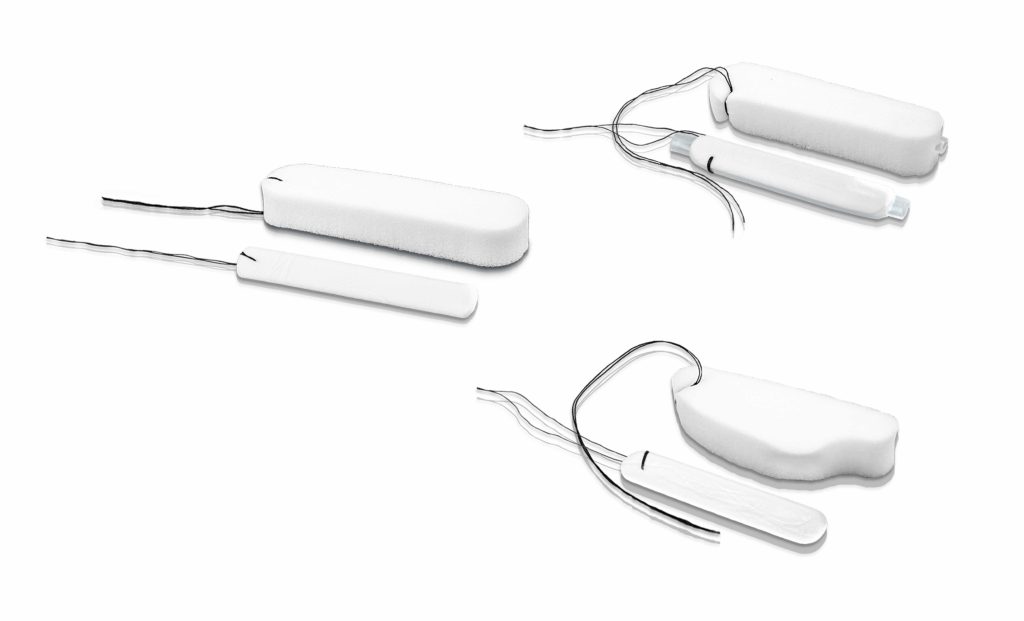 Figure 1. SURGI-PVA™ – Polyvinyl Alcohol Haemostatic Dressing
How Does SURGI-PVA™ Work?
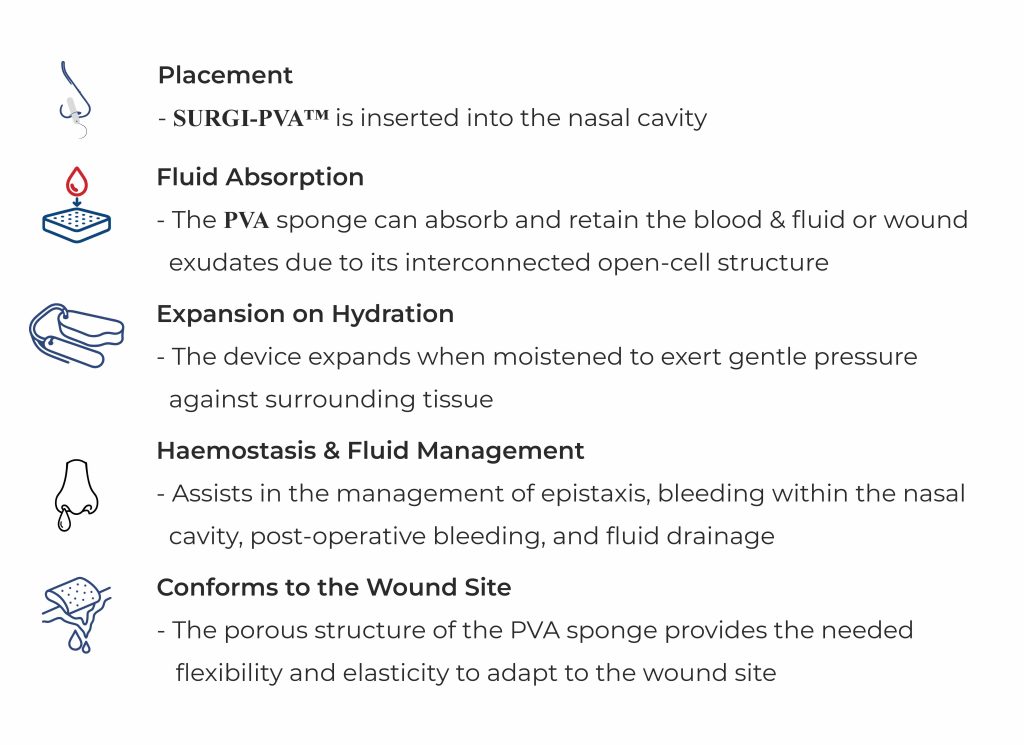
SURGI-PVA™ supports haemostasis through a simple yet effective mechanism that combines rapid fluid absorption with gentle tamponade. Its highly absorbent PVA structure rapidly absorbs and retains blood and wound fluid several times its own weight, helping control wound fluid, support drainage, and provide effective haemostasis.
The mode of action is summarised below:
 Why Does SURGI-PVA™ Make a Difference?
The unique properties of SURGI-PVA™ enable rapid fluid absorption, effective haemostasis, and improved patient comfort. Its soft, rounded edges minimise friction and tissue irritation, allowing easy insertion and atraumatic removal.
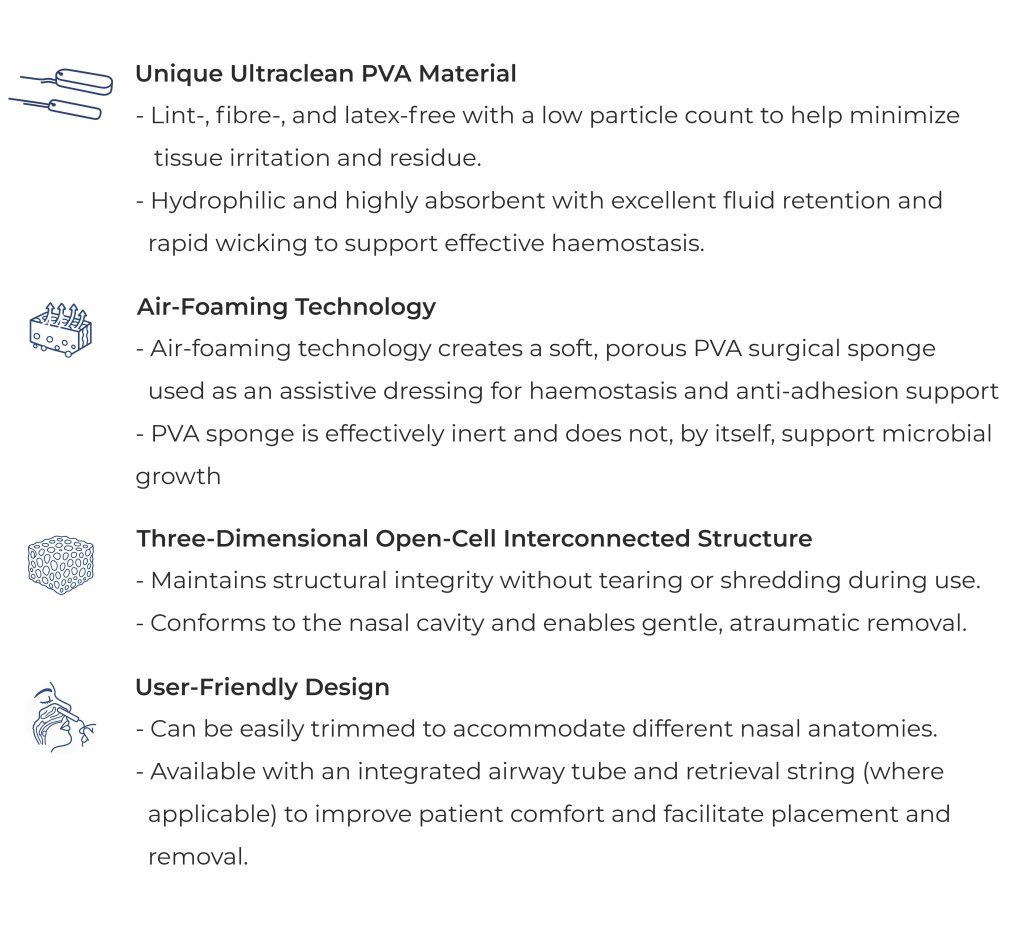
Key Features and Clinical Benefits:
 What Does the Clinical Study Say About PVA Nasal Packs?
A prospective comparative study involving 40 patients with anterior epistaxis compared PVA nasal pack with traditional ribbon gauze for anterior nasal packing.
Study Results:
Patients were followed on postoperative Days 2 and 7 to evaluate pain, bleeding after pack removal, the need for repacking, and synechiae formation.3
Table 1. Clinical Outcomes of Ribbon Gauze versus PVA Nasal pack in Anterior Epistaxis3
| Clinical Outcome (n = 20 per arm) | Ribbon Gauze | PVA Nasal Pack | |
| Bleeding after pack removal requiring repacking | Repacking required | 3 (15%) | 1 (5%) |
| No repacking required | 17 (85%) | 19 (95%) | |
| Synechia formation | Present | 5 (25%) | 2 (10%) |
| Absent | 15 (75%) | 18 (90%) | |
| Pain severity (VAS score) | Mild (1–3) | 0 (0%) | 3 (15%) |
| Moderate (4–7) | 3 (15%) | 14 (70%) | |
| Severe (8–10) | 17 (85%) | 3 (15%) | |
Data presented as number of patients, n (%). Pain assessed using the Visual Analogue Scale (VAS).
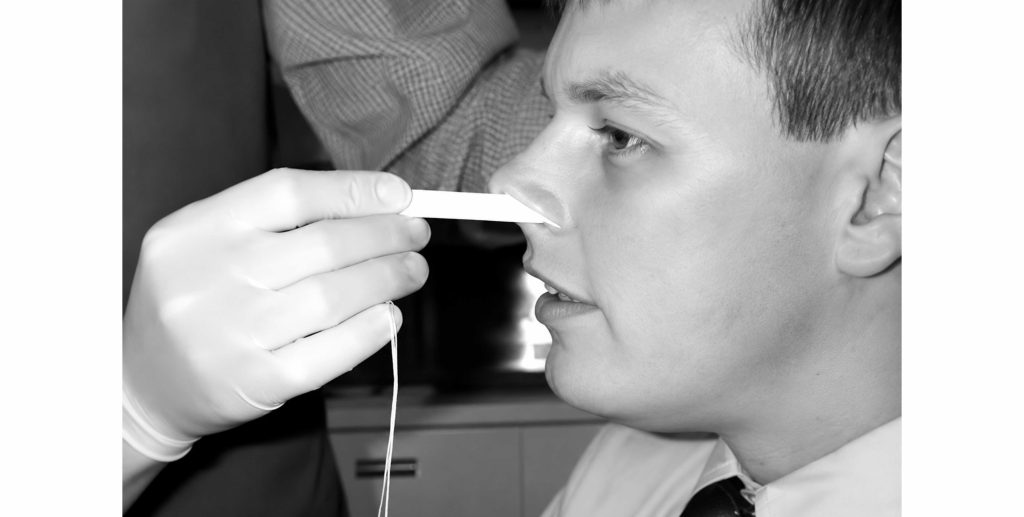
Figure 2. Correct insertion of a PVA nasal pack along the floor of the nasal cavity.2
Overall, the findings support that PVA pack as a preferred treatment modality for anterior epistaxis, particularly when patient comfort and long-term outcomes are important considerations.3
Conclusion
Managing anterior epistaxis is not only about stopping the bleeding but also about ensuring patient comfort and supporting a smooth recovery. While traditional ribbon gauze remains effective for immediate haemostasis, PVA nasal packs demonstrated important advantages, including lower pain scores, improved long-term bleeding control, and reduced synechia formation. The clinical outcomes observed support the use of SURGI-PVA™ as a valuable alternative for anterior nasal packing, particularly when patient comfort and postoperative recovery are important clinical considerations.
Frequently Asked Questions
- What is a SURGI-PVA™ nasal pack?
SURGI–PVA™ is a sterile, single-use polyvinyl alcohol (PVA) nasal pack designed to support fluid management and local haemostasis. After hydration, it expands to provide gentle pressure within the nasal cavity.
- What are the advantages of the SURGI-PVA™ sponge?
SURGI-PVA™ is made from highly absorbent PVA foam that expands after hydration to conform to the nasal cavity. It offers high fluid absorption, retention and rapid wicking while facilitating easy insertion and atraumatic removal.
- Can PVA nasal packs help reduce complications such as synechiae, the need for repacking and pain?
Yes, clinical studies have reported that PVA nasal packs may be associated with a lower incidence of synechiae formation, fewer patients requiring repacking after pack removal, and lower pain scores compared with conventional ribbon gauze in the management of anterior epistaxis.1,3
- Can SURGI-PVA™ sponge be trimmed before use?
Yes, SURGI-PVA™ can be trimmed to fit individual nasal anatomy and clinical requirements while maintaining structural integrity.
References
- Adil A, Parmar SM, Singh V, Bhatia P, Saroha R. Study of Comparison of Conventional Nasal Pack with Merocele Nasal Pack in the Management of Epistaxis. International Journal of Medical and Pharmaceutical Research. 2026 Jul 3;7:79-85.
- Pope LE, Hobbs CG. Epistaxis: an update on current management. Postgraduate medical journal. 2005 May;81(955):309-14.
- Haque MA. Merocel Tampons (PVA) vs Traditional Ribbon Gauze in the Treatment of Anterior Epistaxis. The Insight. 2023;6(2):235-43.