


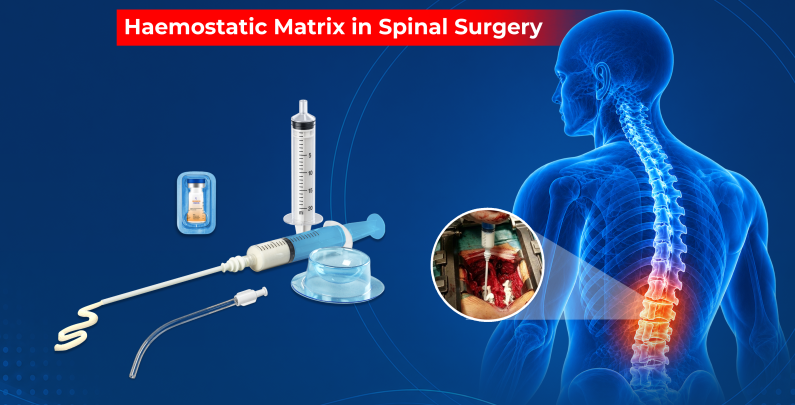
Role of a Flowable Gelatin Haemostatic Matrix in Spinal Surgery
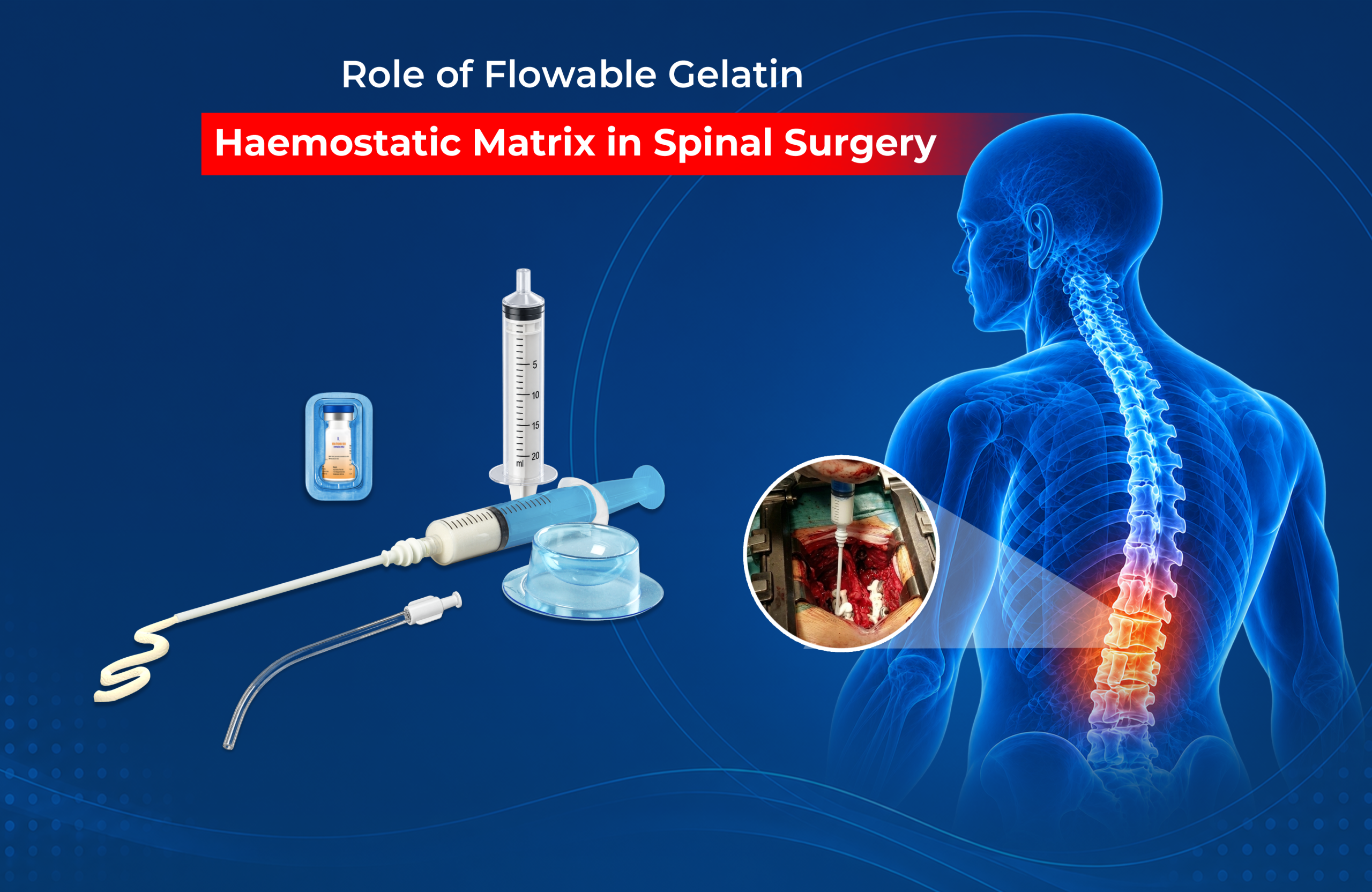
Effective haemostasis is essential in spinal surgery, as even minor bleeding can impair visibility and surgical precision, potentially increasing the risk of neurological complications. Bleeding from major vessels can result in substantial blood loss within a short period and may become life-threatening if not promptly controlled. Persistent oozing from the paravertebral muscles and epidural venous bleeding can be challenging and time-consuming to control, particularly during minimally invasive spinal procedures, where maintaining a clear operative field is essential for precise surgical intervention.1,2
Bipolar coagulation may help control bleeding from the spinal venous plexus; however, the thermal energy generated at the forceps tips may affect adjacent neural structures.2 Therefore, achieving prompt and controlled haemostasis can help maintain surgical visibility and support precise tissue handling.
In this setting, a flowable gelatin haemostatic matrix such as FLOGEL® may help address intraoperative bleeding challenges in spinal surgery and support safe and efficient surgical procedures.
Aegis Lifesciences is a leading FLOGEL® manufacturer and global provider of advanced haemostatic and wound management solutions.
Understanding FLOGEL® and its role in spinal surgery
FLOGEL® is an absorbable gelatin-based flowable haemostatic matrix supplied in a prefilled syringe. Its flowable matrix allows it to conform to irregular wound geometries and reach bleeding sites that may be difficult to access directly. FLOGEL® can be applied locally and may be used with sterile saline or thrombin, where applicable, to support haemostasis.
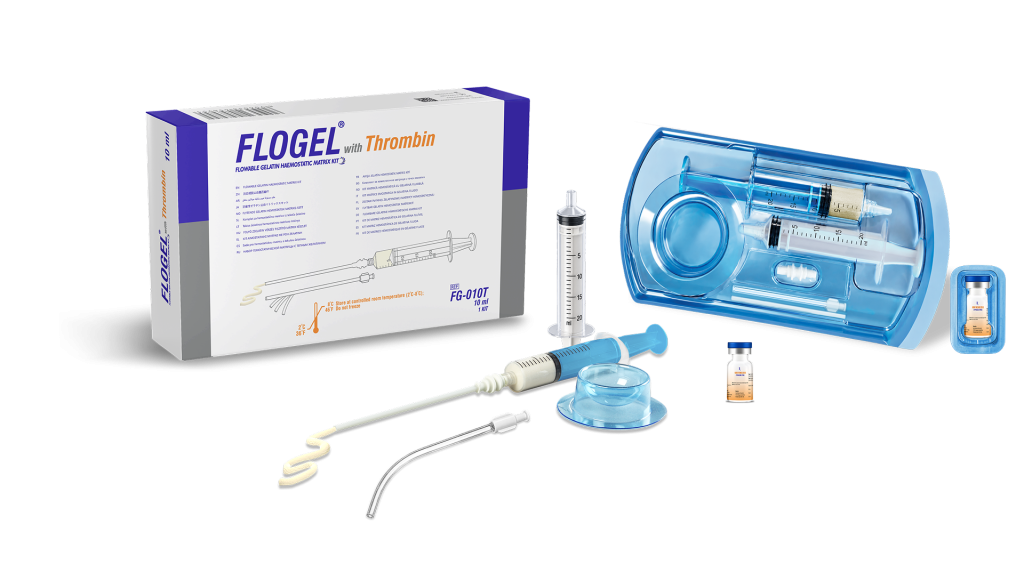
Figure 1. FLOGEL® Flowable Gelatin Haemostatic MatrixKit
In spinal surgery, particularly minimally invasive procedures and microneurosurgery, the narrow or deep operative field and proximity to delicate neural structures can make bleeding management challenging, as even minor bleeding may impair visualization and make precise tissue handling more difficult. Therefore, practical characteristics such as rapid action, easy preparation, and adaptability to irregular or deep surgical surfaces are important when using a haemostatic adjunct. FLOGEL®offers these features, which may support its use during spinal procedures, as outlined below:
Key Features of FLOGEL® in Surgical Practice:
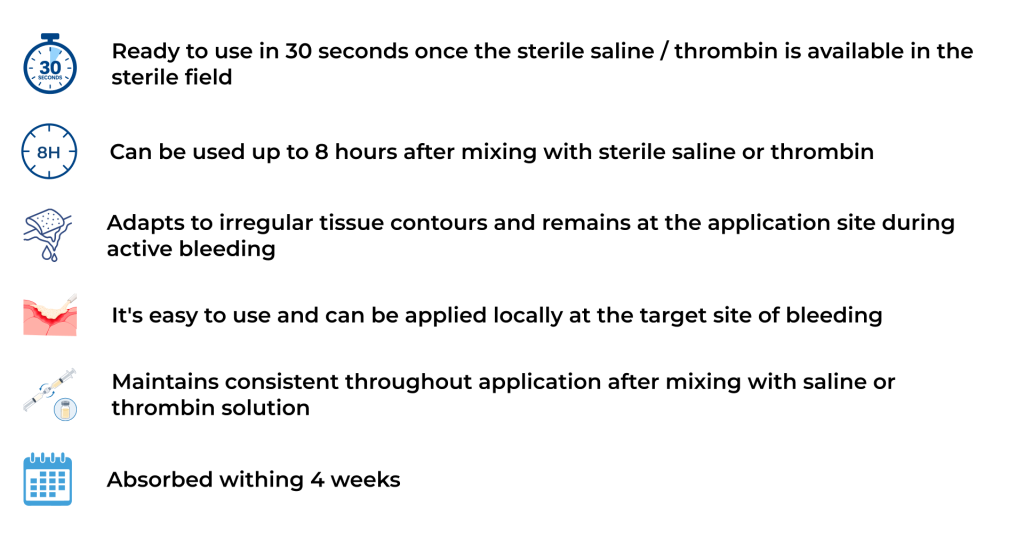 These features support the practical use of FLOGEL® during surgery. To understand its role more clearly, it is also important to consider how the matrix supports the body’s natural haemostatic process.
How Does FLOGEL® Support Haemostasis?
FLOGEL® acts locally at the bleeding site by providing a gelatin matrix that promotes the processes involved in the body’s natural haemostatic response. 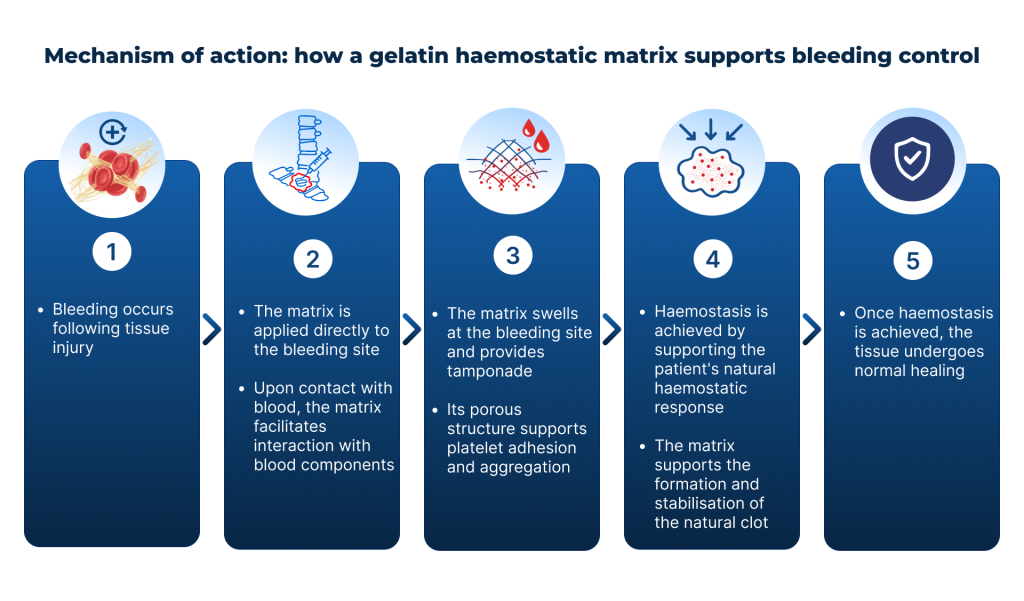
These processes provide the biological basis for the haemostatic action of FLOGEL®. To understand how a gelatin haemostatic matrix performs in clinical practice, it is important to consider the available clinical evidence from spinal procedures.
Clinical evidence of the use of a gelatin haemostatic matrixin spinal surgery
A prospective, multicentre, single-arm trial evaluated a thrombin–gelatin haemostatic matrix in 67 consecutive spinal procedures. The study included posterior, anterior, and lateral approaches involving the cervical, thoracic, and lumbar spine. Thrombin–gelatin haemostatic matrix was applied directly to the bleeding site in the spinal epidural space, particularly when venous bleeding persisted despite the use of conventional haemostatic techniques.Clinical and neurological assessments were performed on postoperative Day 1, at discharge, and at 1-month follow-up.2
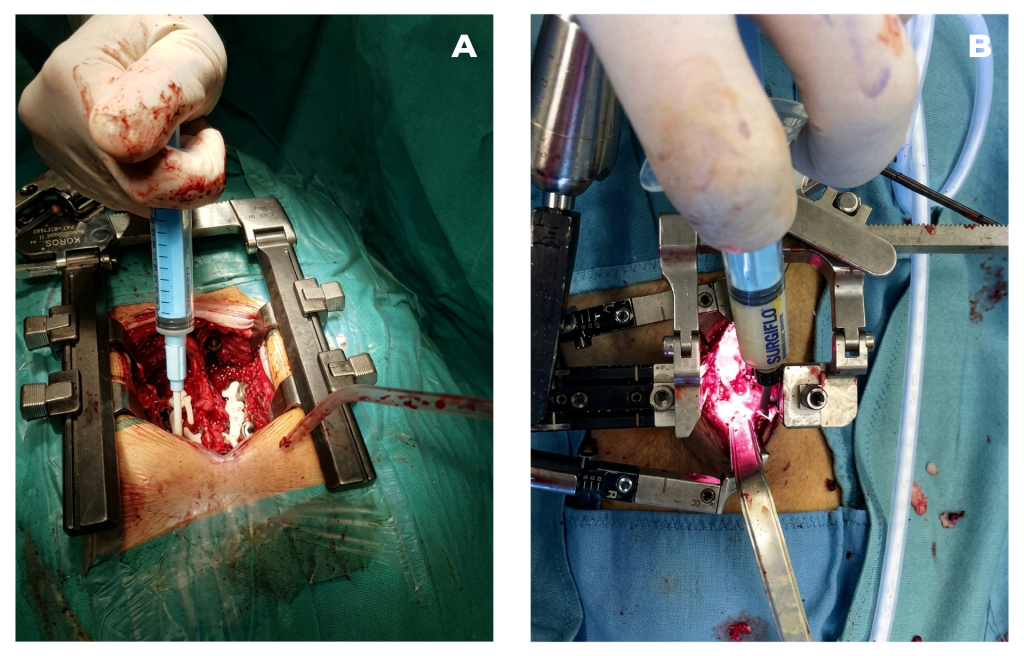 Figure 2:A. After removal of the posterior lumbar laminae with bleeding from the epidural venous plexus, haemostasis is achieved by applying thrombin–gelatin haemostatic matrix. B. Intraoperative application of a thrombin–gelatin haemostatic matrix in operative cave with the long flexible tip during extreme lateral interbody fusion procedure to remove a lumbar spinal tumor2
Key clinical observations:2
- Excellent or good haemostatic outcomes were reported in all cases, with immediate control of epidural bleeding and haemostasis achieved within 3 minutes.
- No complications related to the thrombin–gelatin haemostatic matrix were reported.
- No cases of adverse events or allergic reactions related to the haemostatic matrix were observed.
Collectively, the thrombin–gelatin haemostatic matrix has been demonstrated to rapidly control bleeding during spinal approaches and may help minimize blood-related challenges that arises due to blood loss such as obscured vision of the operating field.2
Conclusion
In spinal surgery, epidural venous plexus bleeding can obscure the narrow surgical fieldduring minimally invasive procedures. FLOGEL® may help control bleeding and maintain visualization, with its flowable formulation facilitating application to tight, irregularspaces, especially difficult-to-reach sites. By promoting effective haemostasis, it may help minimize perioperative blood loss and operative time and serve as a useful haemostatic adjunct when conventional strategies provide ineffective or suboptimal bleeding control.
Frequently Asked Questions
- What precautions should be considered when using FLOGEL® in spinal procedures?
Use the minimum amount required to achieve haemostasis and remove any excess material once bleeding is controlled. Take care to avoid excessive packing, as FLOGEL® may swell upon contact with fluid. Refer to the product’s instructions for usefor complete information.
- Is FLOGEL® available in different sizes?
Yes, FLOGEL® is available in 5 mL, 6 mL, 8 mL, and 10 mL sizes, providing options for different surgical requirements. The appropriate size can be selected based on the surgical site, extent of the procedure, and the amount of bleeding requiring haemostatic support.
- Can FLOGEL® be reused or re-sterilized?
No,FLOGEL® is intended for single use only and must not be reused or re-sterilized. Any opened, unused product should be discarded.
- How long does it take for FLOGEL® to work?
FLOGEL® typically achieves haemostasis within 2 to 5 minutes after application, although it may take up to 10 minutes in some cases. When used with thrombin, haemostasis may be achieved within 1.5 minutes.
For more information, explore the FLOGEL® FAQs for answers to commonly asked questions about the product.
References
- Yan H, Yu M, Wang H, et al. Effects of fluid gelatin for lumbar spinal stenosis undergoing lumbar endoscopic bilateral decompression: a prospective, randomized controlled trial. Orthop Surg. 2025;17(4):1162-1171. doi:10.1111/os.14373.
- Gazzeri R, De Bonis C, Galarza M. Use of a thrombin-gelatin hemostatic matrix (Surgiflo) in spinal surgery. Surg Technol Int. 2014;25:280-285. PMID:25419955.
Important note: Please refer to the Instructions for Use (IFU) for complete information on instructions, contraindications, warnings, and precautions