


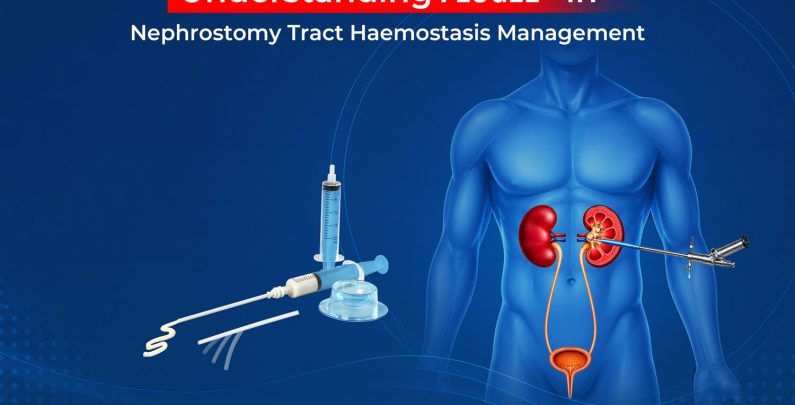
Understanding FLOGEL® in Nephrostomy Tract Haemostasis Management
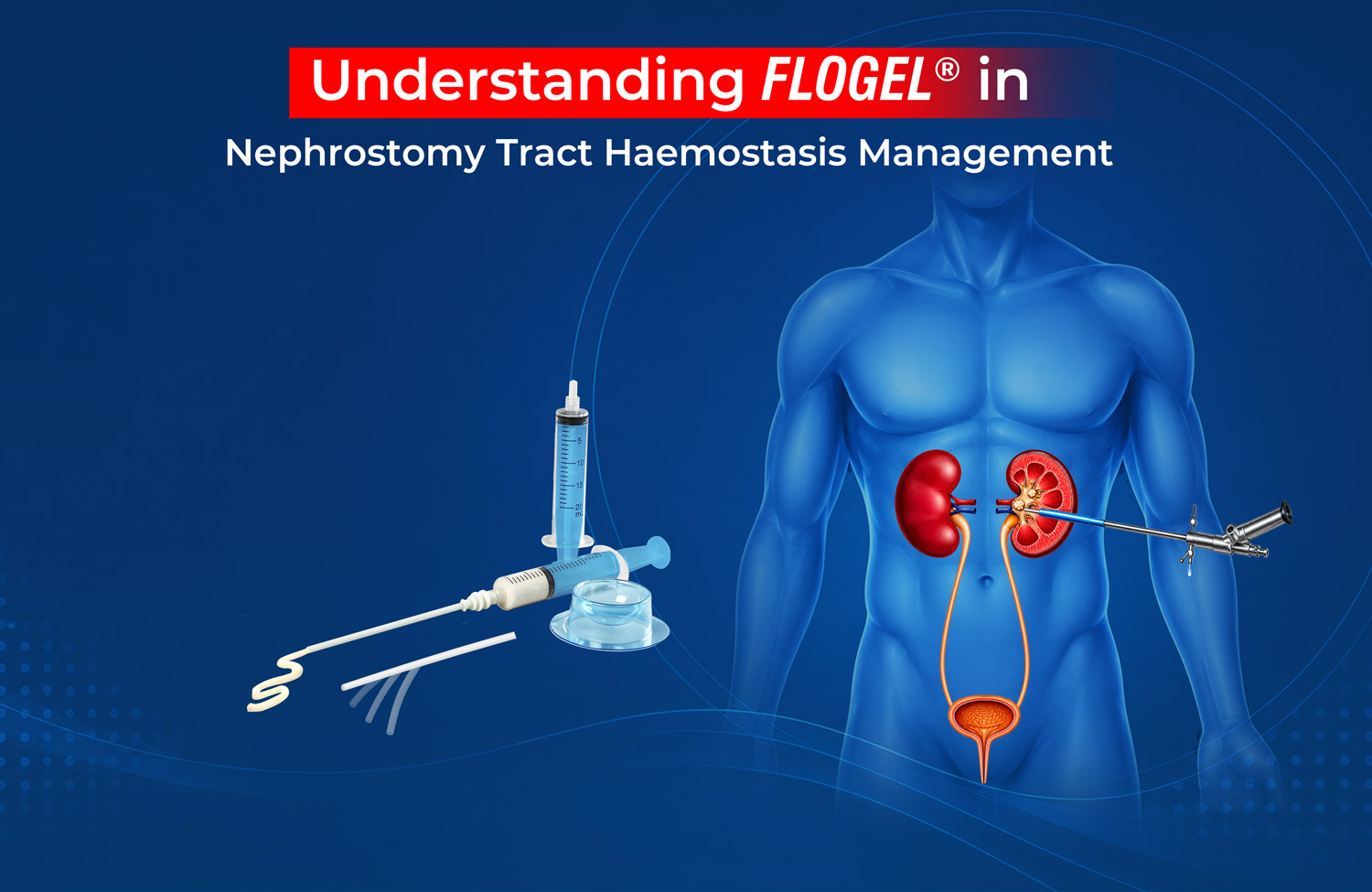
Percutaneous nephrolithotomy (PCNL) is considered the gold-standard treatment for large and complex kidney stones and remains the treatment of choice for renal stones > 2 cm. As the incidence of urolithiasis continues to rise globally, PCNL plays a vital role in achieving complete stone clearance.1,2 Despite continuous advancements in surgical techniques and equipment, intraoperative bleeding is still one of the most challenging aspects of the procedure.
In tubeless PCNL, effective bleeding control is crucial. Removing the nephrostomy tube can improve patient comfort and speed recovery, but it also increases the need for reliable haemostasis at the nephrostomy tract. To address this challenge, surgeons are increasingly turning to adjunctive haemostatic agents, including flowable gelatin-based matrices such as FLOGEL®.
In this blog, we explore how FLOGEL® is used in tubeless PCNL, along with its haemostatic performance and reported clinical outcomes.
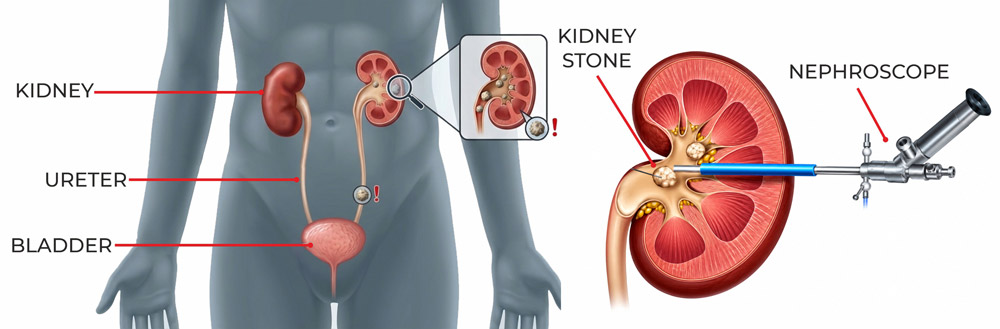
Figure 1: Percutaneous Nephrolithotomy (PCNL)
What Complications Can Occur After PCNL?
While PCNL is generally safe and effective, some complications may occur during or after the procedure. The table below summarizes common issues and their typical management.1,2
| Complication | Management |
| Bleeding | Nephrostomy tube tamponade, tract compression, angiographic embolization (Severe cases) or haemostatic agents (e.g., FLOGEL®) 1,2,3 |
| Perinephric Hematoma | Conservative management, bed rest, blood transfusion if required1,2 |
| Persistent Urine Leakage | Double-J stent placement and urinary drainage1,2 |
| Urinary tract infection /Sepsis | Antibiotic therapy, fluid resuscitation, close monitoring, supportive care1,2 |
| Collecting System Injury | Nephrostomy tube or double-J stent with adequate drainage2 |
| Liver / Splenic Injury | Close monitoring, haemostatic support, prolonged drainage if required2 |
| Thoracic Injury (Hydrothorax, Urinothorax, Pneumothorax, Haemothorax) | Thoracic drainage (tube thoracostomy) if significant; thoracoscopic intervention in select cases2 |
| Colonic or Bowel Injury | Drainage, antibiotics, bed rest; surgery for severe cases2 |
| Vascular Injury (Pseudoaneurysm / AV Fistula) | CT evaluation and selective angioembolisation2 |
Among these complications, bleeding is a key concern in tubeless procedures, where good control of nephrostomy tract haemostasis is essential. In such cases, adjunctive haemostatic agents like FLOGEL® can help achieve it efficiently.
What Is FLOGEL® and How Does It Work?
FLOGEL® is a flowable gelatin haemostatic matrix made from absorbable gelatin sponge (USP) powder. It is supplied as a sterile kit containing the flowable matrix and all accessories required for preparation and application. The matrix is provided in a prefilled 20 mL syringe and appears off-white to slightly yellow in colour. All components are sterilized using gamma irradiation.
FLOGEL® supports haemostasis by:
- Providing an environment that promotes platelet adhesion and aggregation
- Enhancing the body’s natural coagulation cascade
- When used with thrombin, accelerating platelet plug formation and supporting fibrin clot formation
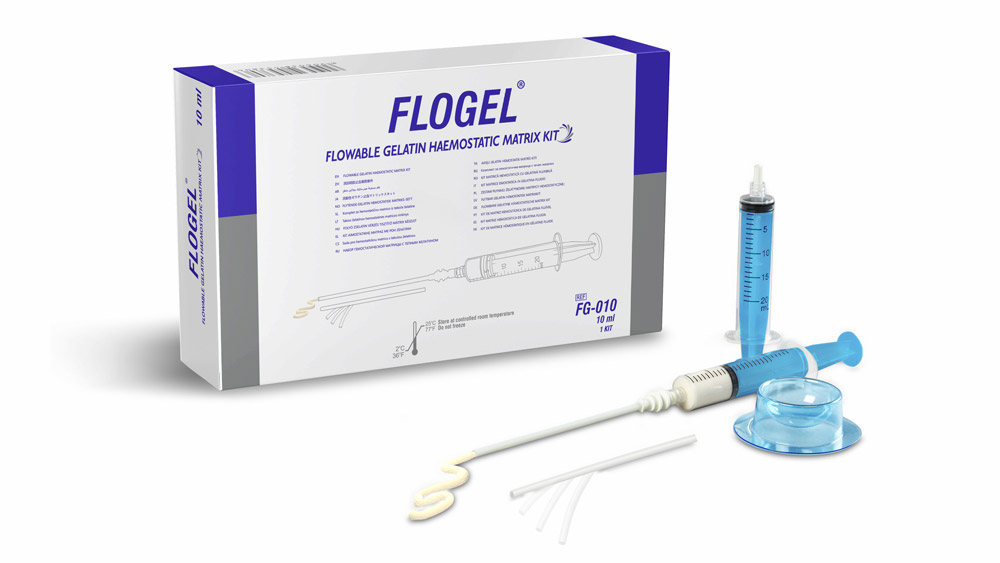
Figure 2: FLOGEL® Flowable Gelatin Haemostatic Matrix Kit
What Are the Key Features of FLOGEL®?
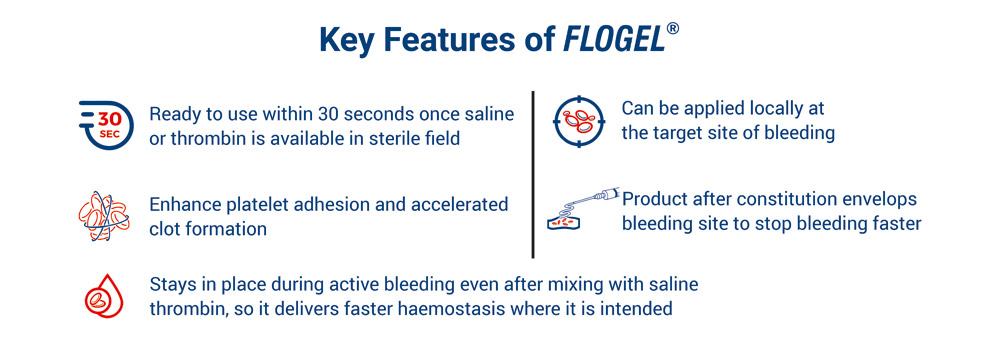 Its flowable consistency allows it to conform to irregular and tight spaces, especially at a difficult to reach surgical site such as the nephrostomy tract, enabling stable local clot formation where conventional materials may be difficult to apply.
Clinical Evidence Supporting FLOGEL® in Nephrostomy Tract Haemostasis:
A case report documented the successful use of FLOGEL® in a 44-year-old male undergoing tubeless PCNL for the treatment of a right renal calculus. Following complete stone removal, approximately 8 mL of FLOGEL® was applied directly into the nephrostomy tract, resulting in haemostasis without the need for additional haemostatic measures. 3
Key Outcomes:
- Haemostasis achieved within 2.5 minutes
- Haemodynamically stable throughout the procedure
- No intraoperative complications
- No postoperative bleeding, urine leakage, infection, or other adverse events at 60-day follow-up
- Postoperative imaging on Day 2 showed no residual haemostatic material
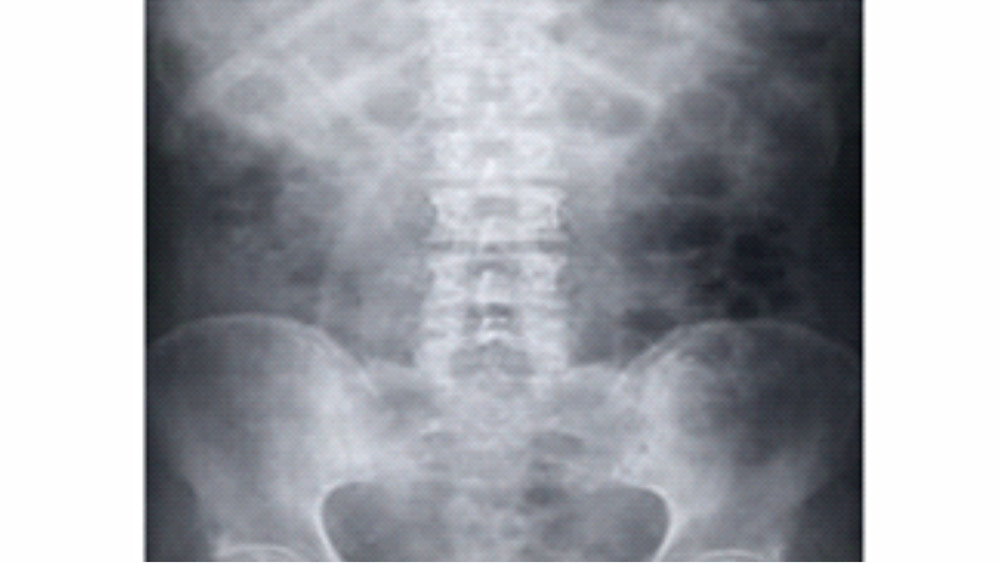
Figure 3: Postoperative Day 2 abdominal radiograph showing no residual FLOGEL® in the nephrostomy tract3
These findings suggest that FLOGEL® may serve as a practical adjunct for nephrostomy tract haemostasis in selected tubeless PCNL procedures.
Conclusion
Nephrostomy tract haemostasis is an important consideration in tubeless PCNL, helping to minimize postoperative complications and support recovery. FLOGEL® offers a practical approach by conforming to the tract and supporting local clot formation. Early clinical experience has demonstrated encouraging outcomes, including rapid haemostasis and an uncomplicated postoperative course. FLOGEL® may serve as a useful adjunct for nephrostomy tract haemostasis in selected PCNL cases.
Frequently Asked Questions
- What is FLOGEL®?
FLOGEL® is a flowable, absorbable gelatin-based haemostatic matrix designed to control localized bleeding during surgery.
- Can FLOGEL® be used in procedures other than PCNL?
Yes, Flowable gelatin-based haemostats may be used across multiple surgical specialties wherever precise, localized bleeding control is required and clinically appropriate.
- How does FLOGEL® support haemostasis?
FLOGEL® conforms to the surgical site; it supports haemostasis by promoting platelet adhesion, accelerating platelet plug formation and aiding fibrin clot formation.
- Can FLOGEL® be used with thrombin?
Yes, it can be prepared with either sterile saline or thrombin depending on clinical needs and surgeon preference.
References:
- Sepulveda F, Aliaga A, Fleck D, Fernandez M, Mercado A, Vilches R, Moya F, Ledezma R, Reyes D, Marchant F. Hemostatic agents for access tract in tubeless percutaneous nephrolithotomy: Is it worth?. Urology annals. 2016 Apr 1;8(2):208-12. DOI: https://doi.org/10.4103/0974-7796.163796
- Escobar Monroy R, Proietti S, De Leonardis F, Gisone S, Scalia R, Mongelli L, Gaboardi F, Giusti G. Complications in percutaneous nephrolithotomy. Complications. 2025 Feb 10;2(1):5. DOI: https://doi.org/10.3390/complications2010005
- Piyush Patel, Shahid N. Karatela, Bhavin Trivedi, Diksha Sharma. (2026). Use of A Flowable Absorbable Gelatin Matrix For Nephrostomy Tract Hemostasis During Tubeless Percutaneous Nephrolithotomy: A Case Report. Scientific Culture, 12(4).
https://doi.org/10.5281/zenodo.20046922