Optimized Haemostatic Dressing for Better Hepatic Resection Outcomes

Hepatectomy, or liver resection, is a surgical procedure in which a portion of the liver is removed, typically to treat liver tumors or other hepatic diseases. For many patients with primary or secondary liver malignancies, resection offers the potential curative option. 1-2 Anatomical liver resections are typically classified according to hepatic inflow anatomy, as shown in the image below.1

Fig1: Resectional liver anatomy1
Surgical Approach Techniques2
- Open Liver Resection (Traditional Standard)
- Minimally Invasive Approaches:
- Laparoscopic Liver Resection
- Hand-Assisted Laparoscopic
- Robotic-Assisted Hepatectomy
Despite modern surgical advances, liver resection can still result in significant blood loss, increasing the risk of complications such as infected haematomas, bile leaks, and even mortality.1-3 Thus, selecting an effective haemostatic dressing is essential.
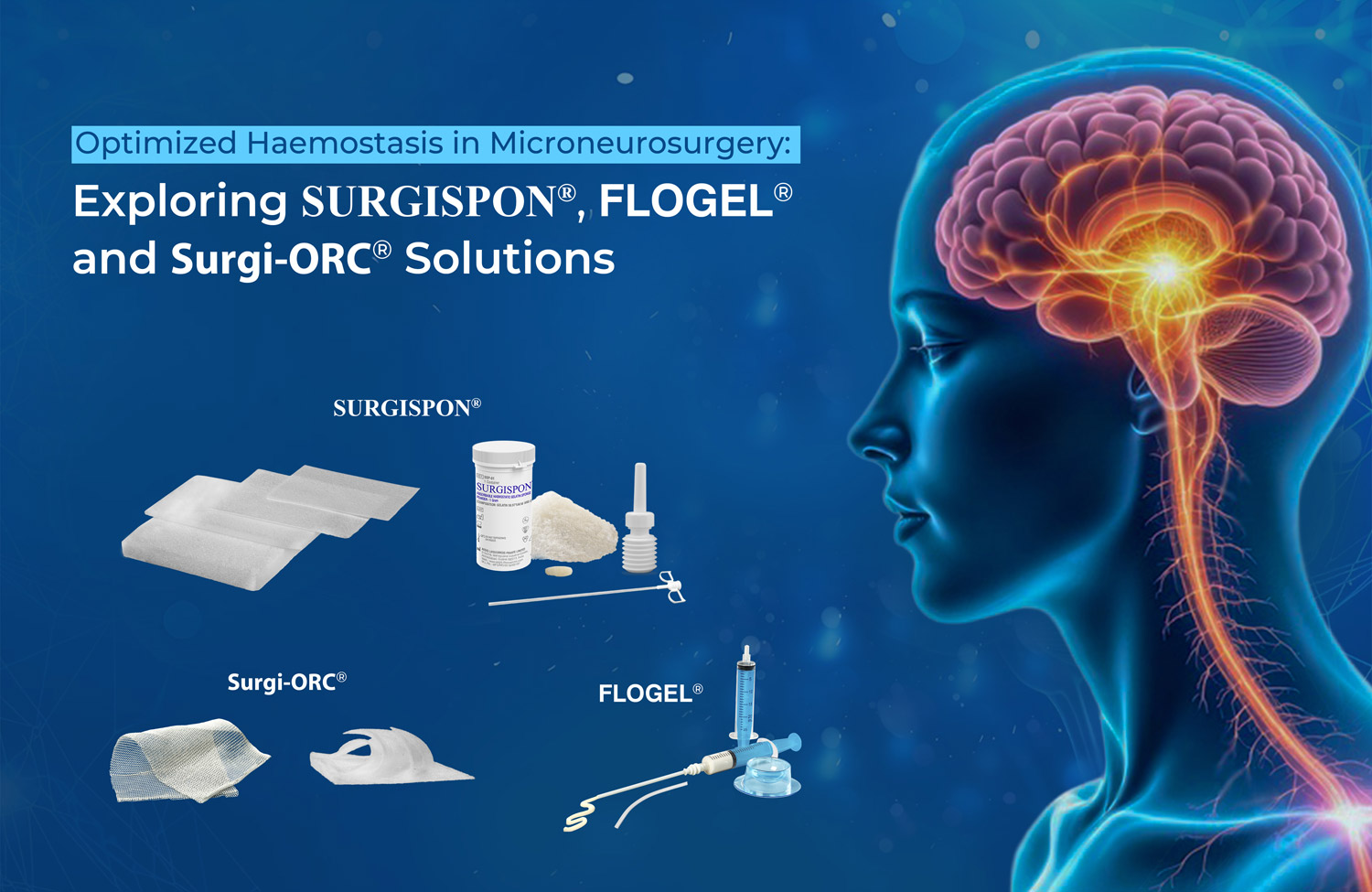
Surgi-ORC® meets this clinical need by providing fast, reliable haemostasis and supporting a smoother surgical procedure.
What is Surgi-ORC®?
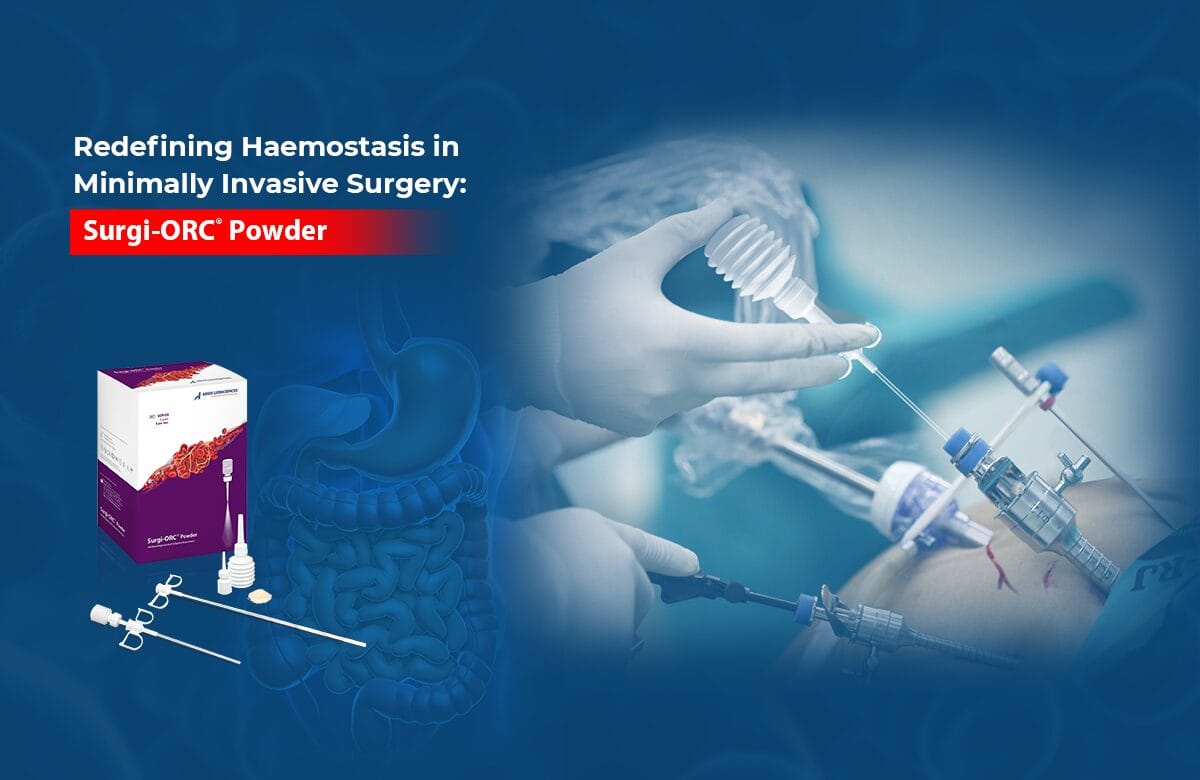
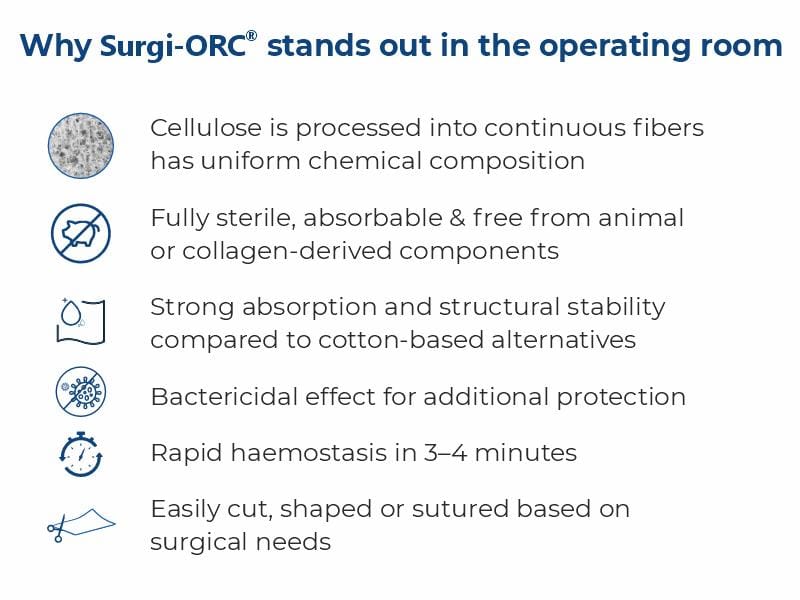
Surgi-ORC® is a natural, plant-based absorbable haemostat made from oxidized regenerated cellulose (ORC) suitable for use as a haemostat surgical dressing. It helps controls capillary, venous, and small-arteriolar bleeding during the management of local bleeding in patients undergoing hepatic resection.
Available Variants to Support Hepatic Resection Needs
- Surgi-ORC® ORIGINAL– A highly flexible, drapeable surgical dressing suitable for general surgical bleeding control
- Surgi-ORC® KNIT– A denser format that can be sutured and is well-suited for diffuse organ bleeding control
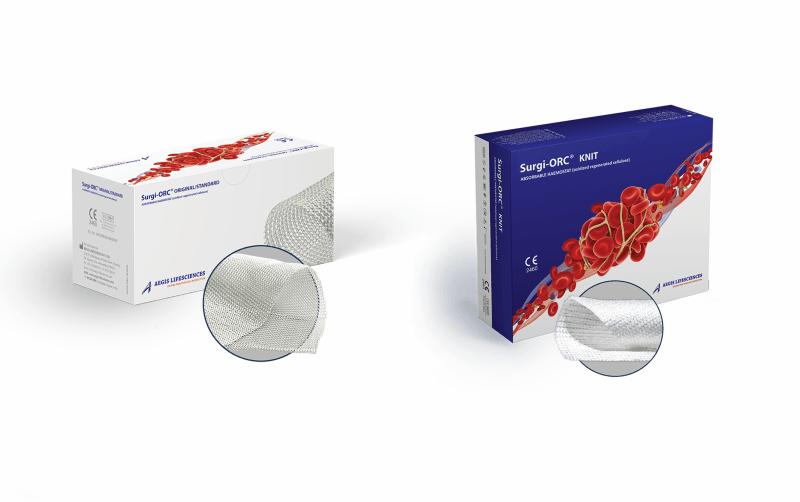
Fig 2: Surgi-ORC® Absorbable Haemostat (Oxidized Regenerated Cellulose)

Clinical Evidence:
A randomized, single-center trial compared oxidized regenerated cellulose gauze (ORCG-Surgicel™ Original) with oxidized non-regenerated cellulose gauze (ONRCG- Traumastem TAF) in hepatic resections, demonstrating comparable haemostatic success rates between the two groups.4
Key Observations
- No significant difference observed between ORCG and ONRCG in: 4
- Time to haemostasis: 238.8 ± 121.6 sec vs. 193.7 ± 85.3 sec (p = 0.068)
- Postoperative drainage output (Day 1 & 2)
- Haemostatic effectiveness
- Total and postoperative hospital stay
- Safety profile and adverse events
Conclusion
In summary, Surgi-ORC® offers a simple, reliable, haemostatic surgical dressing solution suitable for liver resections surgical procedure. Its ease of handling, consistent performance and safe absorption profile help maintain a smooth workflow in the operating room-giving surgical teams one less challenge to manage during critical moments.
References
- Vagg D, Toogood G. The principles of liver resection. Surgery (Oxford). 2020 Aug 1;38(8):463-71.
- Aragon RJ, Solomon NL. Techniques of hepatic resection. Journal of gastrointestinal oncology. 2012 Mar;3(1):28.
- Rho SY, Jin M, Kim HK, Park JI, Park JH, Yun S, Lee M, Choi SB, Hong JY, Kim KS. The novel use and feasibility of hemostatic oxidized regenerated cellulose agent (SurgiGuard®): multicenter retrospective study. Gland Surgery. 2023 Jul 31;12(7):905.
- Zhang C, Fu D, Wang F, et al. A randomized controlled trial to compare the efficacy of regenerated and non-regenerated oxidized cellulose gauze for the secondary treatment of local bleeding in patients undergoing hepatic resection. Annals of Surgical Treatment and Research. 2021 Apr;100(4):193-199. DOI: 10.4174/astr.2021.100.4.193. PMID: 33854988; PMCID: PMC8019981